by ajblake
on March 20, 2016
{ }
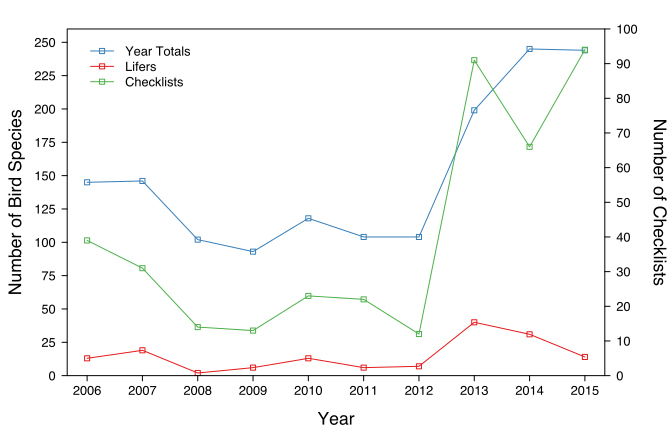
Figure 1 Annual North American totals for bird species, lifers (species not previously observed), and checklists (observations from a specific location and time).
Like my first recap I had intended to post this sometime in January. This year I wanted to streamline my process from the kludgey mess I had been using. I’ve been successful in moving most of the data processing into R, but it did take a while. I’m now able to parse the csv from eBird containing my observations and extract the relevant information. I can then create year, and locations lists using dplyr. This information can then be used to generate graphs, html tables using xtable, or kml files using plotKML. The process is not live updating but for that to work this code would probably need to be ported into MySQL and I would probably need API access from eBird to my own observations. I’m also having an issue with each point in my exported KML file having their own individual style, which then requires some editing in Google Earth. I then still need to manually add it to My Maps before I can embed it on a webpage. I’d welcome any suggestions here for streamlining. If anyone is interested you can find a copy of my R code here. [click to continue…]
by ajblake
on March 13, 2016
{ }

Yellow-bellied Marmot
Marmota flaviventris, Sciuridae
Okanagan Lake Provincial Park, British Columbia, Canada
Nikon D5100, 70-300 mm f/4.5-5.6
April 22, 2015
Now that it’s the middle of March it seems like the perfect time to do some year end posts from 2015… sigh. As you probably noticed from my lack of posts I’ve fallen off the blog wagon. My PhD research started heating up this summer and I just gradually got out of the habit of blogging. Even though I wasn’t blogging I was still taking lot of good photos in a bunch of new and exciting places, so I’ve got even bigger backlog of great photos to share with you. I’m excited to get posting again but if I’m honest I probably won’t be go back to weekly posts. [click to continue…]
by ajblake
on July 9, 2015
{ }
American White Pelican
Pelecanus erythrorhynchos, Pelecanidae
Fern Ridge WMA, Oregon, United States
Nikon D5100, 70-300 mm f/4.5-5.6
May 17, 2015
Here we can see a good example of a male pelican in full breeding plumage. Perhaps the most striking difference is the fibrous plate on the bill, which is sometimes referred to as a nuptial tubercle.
by ajblake
on June 29, 2015
{ }
Black-bellied Plover
Pluvialis squatarola, Charadriidae
Blackie Spit, Surrey, British Columbia, Canada
Nikon D5100, 70-300 mm f/4.5-5.6
May 2, 2015
Black-bellied Plover or Grey Plover in Europe is medium sized plover that breeds in the arctic and winters along the coast. The grey in the name refers to their non-breeding plumage and this species unlike the other members of its genus lack the distinctive golden coloration. They can also be recognized in breeding plumage by their black belly and white vent (compare all black with Golden Plovers). “Grey” Plovers can also be recognized in their winter plumage by their black and white and not grey underwings.
by ajblake
on June 18, 2015
{ }
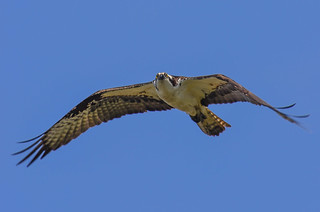
Osprey
Pandion haliaetus, Pandionidae
Iona Beach Regional Park, Richmond, British Columbia, Canada
Nikon D5100, 70-300 mm f/4.5-5.6
May 2, 2015
I was carefully approaching this American Goldfinch when one of Iona Island’s resident Ospreys came flying in low right over my head on its way from the nesting sites along the Fraser.
by ajblake
on June 16, 2015
{ }
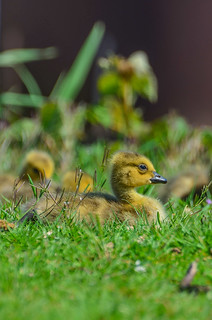
Canada Gosling
Branta canadensis, Anatidae
Iona Beach Regional Park, Richmond, British Columbia, Canada
Nikon D5100, 70-300 mm f/4.5-5.6
May 2, 2015
While this gosling never starred as Young Hercules, he’s still pretty cute.
by ajblake
on June 7, 2015
{ }
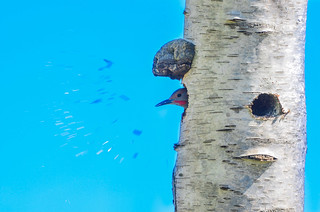
Nesting Northern Flicker
Colaptes auratus, Picidae
Blackie Spit, Surrey, British Columbia, Canada
Nikon D5100, 70-300 mm f/4.5-5.6
April 19, 2015
Here we can see a particularly clear photographic juxtaposition showing the symbiosis between wood softening heart-rot fungi like this Fomes fomentarius and cavity nesting birds like woodpeckers.
by ajblake
on May 15, 2015
{ }
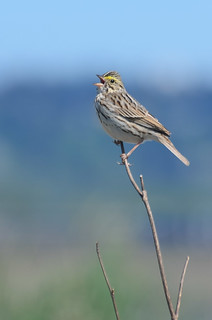
Savannah Sparrow
Passerculus sandwichensis, Emberizidae
Blackie Spit, Surrey, British Columbia, Canada
Nikon D5100, 70-300 mm f/4.5-5.6
April 19, 2015
Here we see my first of season Savannah Sparrow. This photo is also my latest addition to my wide mouth singing bird series.
by ajblake
on April 25, 2015
{ }
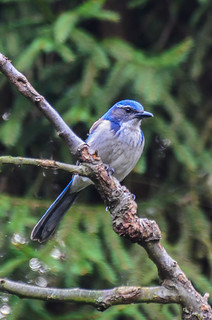
Western Scrub Jay
Aphelocoma californica, Corvidae
Maple Ridge, British Columbia, Canada
Nikon D5100, 70-300 mm f/4.5-5.6
April 12, 2015
This week we revisit the Maple Ridge Scrub Jays. There seems to be a group of 3 Scrub Jays (male, female and last years juvenile) who nested there last year and seem to be preparing to nest this year.
by ajblake
on April 12, 2015
{ }
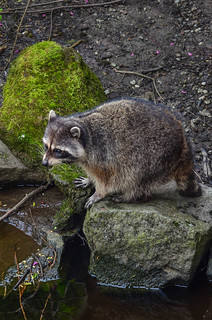
Raccoon
Procyon lotor, Procyonidae
Stanley Park, Vancouver, British Columbia, Canada
Nikon D5100, 70-300 mm f/4.5-5.6
April 4, 2015
Above we see a member of the panhandling family of Raccoons that hang out near the east end of Lost Lagoon. They are fed often enough (despite signs warning of $5000 fine) that they have completely lost their fear of humans and will approach people closely looking for a handout. This feeding is so regular that they have adapted to being day active, despite being primarily nocturnal, to take better advantage of this free lunch.

Find Me On