by ajblake
on October 31, 2016
{ }

Jorō Spider - ♀
Nephila clavata, Nephilidae
Mount Ogusu, Yokosuka, Kanagawa, Japan
Nikon D5100, 70-300 mm f/4.5-5.6
October 23, 2016
Sneaking in for the end of #aractober we have this photo of a female Jorō Spider. This is by far the most prominent spider I’ve encountered in Japan, only narrowly avoiding their webs on several occasions. This spider also features prominently in the folklore of Japan with this species inspiring the legend of the Jorōgumo, a shapeshifting spider that would lure male victim by taking the form of a beautiful woman.
by ajblake
on September 27, 2016
{ }

Flying V
Brunswick Point, Delta, British Columbia, Canada
Nikon D5100, 70-300 mm f/4.5-5.6
August 7, 2016
Just like the underdogs in district 5, when these geese were challenged by a tough opponent (raptor flyby), they banded together to cut air resistance for the entire group.
by ajblake
on July 29, 2016
{ }

Brown-headed Cowbird - ♂
Molothrus ater, Icteridae
Burnaby Lake Park, Burnaby, British Columbia, Canada
Nikon D5100, 70-300 mm f/4.5-5.6
June 26, 2016
I really like the detail in this Cowbird portrait shot. You can even see the small individual rimal feathers surrounding the eye.
by ajblake
on July 26, 2016
{ }

Sagebrush Mariposa Lily
Calochortus macrocarpus, Liliaceae
Nighthawk Road, Okanagan-Similkameen, British Columbia, Canada
Nikon D5100, 70-300 mm f/4.5-5.6
June 21, 2016
Went on a successful hunt for a Sage Thrasher on Nighthawk Road and the roadsides were full of these striking purple flowers. Because of their thin grass like leaves these lilies seems to come from nowhere.
by ajblake
on July 14, 2016
{ }

Flower Longhorn
Cortodera subpilosa, Cerambycidae
Wagonwheel Road, Kootenay Boundary, British Columbia, Canada
Nikon D5100, 105 mm f/2.8
June 21, 2016
Recently, Sara and I headed down south to the land of the pines. While we were staring down the road, we picked out this bouquet of flowers, which led us to this momma of a flower longhorn.
Thanks to Bruce Tilden for the ID!
by ajblake
on July 11, 2016
{ }
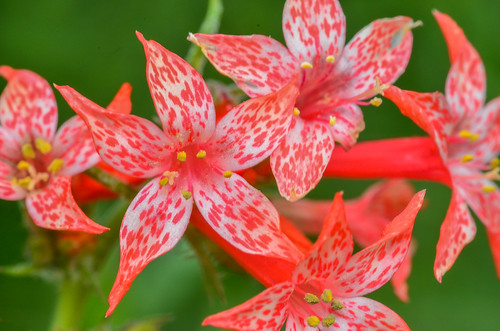
Scarlet Gilia
Ipomopsis aggregata, Polemoniaceae
Wagonwheel Road, Kootenay Boundary, British Columbia, Canada
Nikon D5100, 105 mm f/2.8
June 21, 2016
This species is also known as Skyrocket due to the trumpet shape with back curved petal lobes. It really was a highlight of the afternoon when we came across it blooming on a recent trip to the interior.
by ajblake
on June 29, 2016
{ }
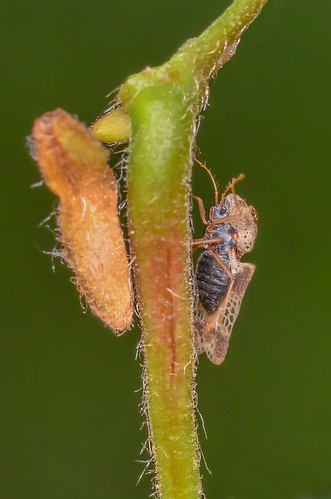
Lace Bug
Corythucha sp., Tingidae
Cogburn Beach, Harrison Lake, British Columbia, Canada
Nikon D5100, 105 mm f/2.8
May 22, 2016
This photo gives an unusual angle on a Lace Bug, focusing on their more buggy underside (rather than the lacey wings) and making obvious their phylogenetic relationship with bed bugs.
by ajblake
on June 28, 2016
{ }

Ruddy Duck - ♂
Oxyura jamaicensis, Anatidae
Oregon Zoo, Portland, Oregon, United States
Nikon D5100, 70-300 mm f/4.5-5.6
July 11, 2015
I really like the contrast in this shot between the air and the water. The parts of the duck below the water look darker, bigger and slightly misaligned with the parts above the water. All of these differences can be explained by the bending of light as it transitions from water to air (a.k.a. refraction).
by ajblake
on June 18, 2016
{ }

Western Pondhawk -♀
Erythemis collocata, Libellulidae
Minnekhada Regional Park, Coquitlam, British Columbia, Canada
Nikon D5100, 70-300 mm f/4.5-5.6
June 13, 2015
This week’s photo shows you that in the insect world, not even aerial predators are safe from other aerial predators. Watch your sixes!
by ajblake
on June 7, 2016
{ }

Mute Swan
Cygnus olor, Anatidae
Grant Narrows, Pitt Meadows, British Columbia, Canada
Nikon D5100, 70-300 mm f/4.5-5.6
June 5, 2016
Unlike the Mute Swans of Stanley Park, which have had their wings clipped, the resident mute swans are truly feral and hence countable in a bird watching sense. This swan was being exceptionally cooperative swimming right up to the dike near the viewing tower whereas they are usually sighted far away at the southeastern end of Katzie Marsh.

Find Me On