by ajblake
on July 11, 2014
{ }
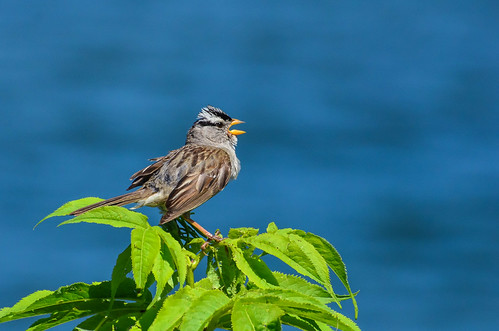
White-crowned Sparrow
Zonotrichia leucophrys, Emberizidae
Grant Narrows, Pitt Meadows, British Columbia, Canada
Nikon D5100, 70-300 mm f/4.5-5.6
July 1, 2014
I took this weeks photo along the Pitt River dike. It seems like there is a pair of White-crowned Sparrows every 100 m along the dike. I don’t know what they are all eating. I like this photo as it shows just how wide bird mouths can get when they’re singing.
by ajblake
on July 4, 2014
{ }
Horse Fly – ♂
Hybomitra sp., Tabanidae
Ferry Point Landing, Alberta, Canada
Nikon D5100, 105 mm f/2.8
June 21, 2014
This week we have another photo from my recent trip to Alberta. You can recognize this horse fly as a male by its enlarged eyes that meet across the face in a narrow furrow. You can also see the pattern of light and dark bands across the eyes. This pattern is an example of structural color resulting from constructive interference in the insects cornea. The structure of these corneas differ between the light and dark bands causing the different colors we observe. The eyes of Tabanid flies are also interesting as they are able to use polarization-sensitive vision to find oviposition sites and vertebrate hosts for blood feeding.
by ajblake
on June 27, 2014
{ }
Mosquito – ♀
Ochlerotatus dorsalis, Culicidae
Ferry Point Landing, Alberta, Canada
Nikon D5100, 105 mm f/2.8
June 21, 2014
Sorry for the late post I have been traveling for the past week in Alberta and Saskatchewan. Should have a relevant post with some field notes from the Battle River Badlands soon. Now on to the bloodsuckers!
I suffered for this weeks photo; losing microliters of my blood to this beautiful parasite. Make sure to mouse over the picture to see the mosquito pre-engorgement. I’m told (by Sean) that this particular species is adapted to host finding during the warmer temperatures of the day. I can confirm this anecdotally as both myself and other members of my party lost quite a few microliters to this mosquito and her sisters during the heat of a wonderful (and apparently quite rare this spring) sunny afternoon in central Alberta. Thanks again to Sean for the ID.
by ajblake
on June 15, 2014
{ }
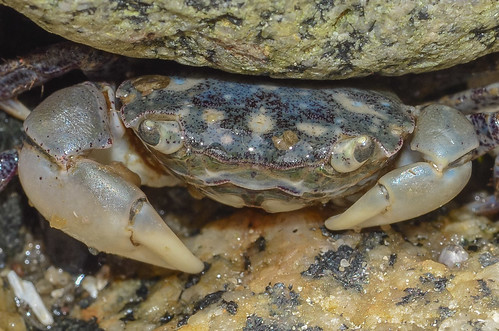
Green Shore Crab
Hemigrapsus oregonensis, Varunidae
Stanley Park, Vancouver, British Columbia, Canada
Nikon D5100, 105 mm f/2.8
June 8, 2014
Sara and I took a long walk (~15 km) around Stanley Park last Sunday. We stopped near the 9 O’Clock Gun to flip rocks in the intertidal. In addition to the Sea Slater we saw all kinds of these crabs hidding under the rocks.
by ajblake
on June 12, 2014
{ }
Mining Bee
Burnaby Lake Park, Burnaby,
British Columbia, Canada
Nikon D5100, 105 mm f/2.8
June 1, 2014
This weeks photo is of a industrious mining bee, working hard to provision her soon-to-be laid eggs. These eggs are laid in burrows dug in sandy soil with each egg being laid on a ball of pollen & nectar and sealed in a small cell. This poor bee is missing one her antennae but from the look of her pollen baskets (yellow lumps of moist pollen on the hind legs and thorax) she seems to be doing fine. Female Andrena like the bee above can be indetified by their “facial foveae”. These twin grooves are located on the face between the eyes and antennae and are filled with pale hair. Thanks to John S. Ascher at BugGuide for help with the ID.
by ajblake
on June 3, 2014
{ }
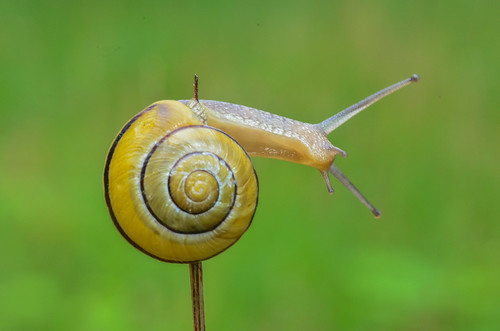
Grove Snail
Cepaea nemoralis, Helicidae
Maplewood Conservation Area,
North Vancouver, British Columbia, Canada
Nikon D5100, 105 mm f/2.8
May 24, 2014
Last weekend I spent some time trying out my new macro rig, a variant of Sean’s monster macro rig. Still working out some kinks but I got a few good shots, my favorite being this photo of a Grove Snail.
This introduced forest snail feeds on dead and senescent vegetation. The Grove Snail is the favorite prey of the Song Thrush (Turdus philomelos). This thrush will use a favorite stone as an anvil to break open the shells of snails. If this sounds familiar you might be a Tolkien fan. This behavior of the Song Thrush may have been the inspiration for the thrush who “knocks” with the last light of Durin’s Day.
by ajblake
on May 30, 2014
{ }
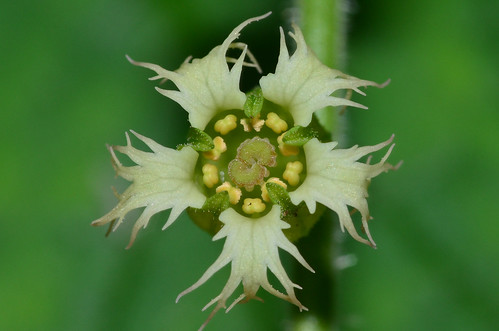
Fragrant Fringecup
Tellima grandiflora, Saxifragaceae
Burnaby Mountain Conservation Area, Burnaby, British Columbia, Canada
Nikon D5100, 105 mm f/2.8
May 11, 2014

Northern Maidenhair Fern
Adiantum pedatum, Pteridaceae
Burnaby Mountain Conservation Area, Burnaby, British Columbia, Canada
Nikon D5100, 105 mm f/2.8
May 11, 2014
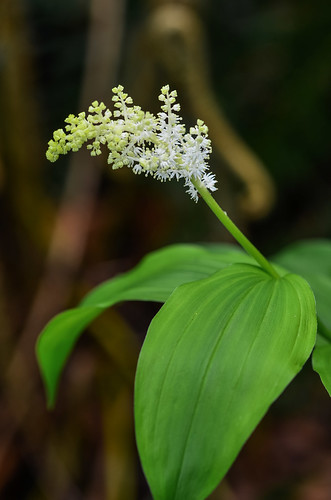
False Solomon's-seal
Smilacina racemosa, Asparagaceae
Burnaby Mountain Conservation Area, Burnaby, British Columbia, Canada
Nikon D5100, 105 mm f/2.8
May 11, 2014
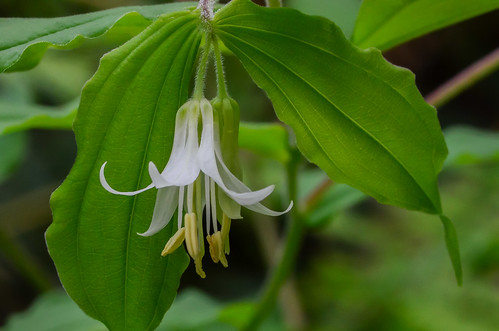
Fairy Bells
Disporum trachycarpum, Colchicaceae
Burnaby Mountain Conservation Area, Burnaby, British Columbia, Canada
Nikon D5100, 105 mm f/2.8
May 11, 2014

Pacific Bleeding Heart
Dicentra formosa, Fumariaceae
Burnaby Mountain Conservation Area, Burnaby, British Columbia, Canada
Nikon D5100, 105 mm f/2.8
May 11, 2014

Honesty
Lunaria annua, Brassicaceae
Burnaby Mountain Conservation Area, Burnaby, British Columbia, Canada
Nikon D5100, 105 mm f/2.8
May 11, 2014

Common Dandelion Puffball
Taraxacum officinale, Asteraceae
Burnaby Mountain Conservation Area, Burnaby, British Columbia, Canada
Nikon D5100, 105 mm f/2.8
May 11, 2014
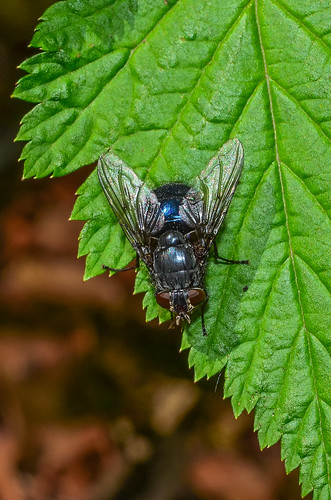
Calliphorid Fly
Calliphoridae
Burnaby Mountain Conservation Area, Burnaby, British Columbia, Canada
Nikon D5100, 105 mm f/2.8
May 11, 2014

Vine Maple
Acer circinatum, Sapindaceae
Burnaby Mountain Conservation Area, Burnaby, British Columbia, Canada
Nikon D5100, 105 mm f/2.8
May 11, 2014

Dwarf Oregon-grape
Mahonia nervosa, Berberidaceae
Burnaby Mountain Conservation Area, Burnaby, British Columbia, Canada
Nikon D5100, 105 mm f/2.8
May 11, 2014

Large-leaved Yellow Avens
Geum macrophyllum, Rosaceae
Burnaby Mountain Conservation Area, Burnaby, British Columbia, Canada
Nikon D5100, 105 mm f/2.8
May 11, 2014
I spent this past Mother’s day enjoying the nice weather on Burnaby Mountain. I had a good day of birding adding a bunch of spring migrants to my year list. As always with my first spring outing, I spent a good chunk of the morning working on my rusty birdcalls. It always takes me a while to get the difference between Pacific-slope & Hammond’s Flycatchers straight in my head and it seems to me that the Black-throated Gray Warbler’s song doesn’t match the recordings I’ve heard. Despite these difficulties with my bird call ID, I saw a good variety of warblers, including large numbers of Yellow-rumped Warblers moving through. The highlight for the day was picking up a Chipping Sparrow for my BC list, in the rose garden near Horizons. I spent more than 7 hours wandering the trails near Horizons covering over 7 kilometers and getting a really wicked sunburn but my effort was rewarded with 28 species of birds. [click to continue…]
by ajblake
on May 28, 2014
{ }
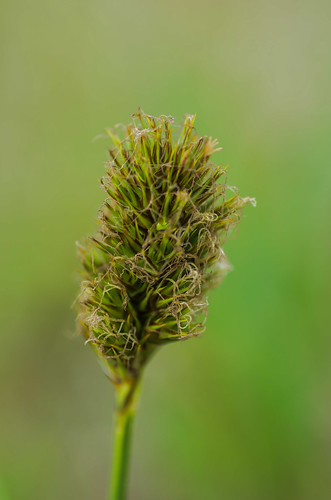
Large-Headed Sedge
Carex macrocephala, Cyperaceae
Iona Beach Regional Park, Richmond, British Columbia, Canada
Nikon D5100, 105 mm f/2.8
May 17, 2014
I decided to go a bit edgy with this weeks photo of the week (a little botany humour for those in the know). Large-Headed Sedge is typically found in sandy coastal areas just like the regenerating sand dunes where I found it on Iona Island. The sedge is amphiberingian in distribution, meaning it is native to coastal areas on both sides on the Bering Sea. Interestingly the sedge is potential invasive on east coast where it has established in New Jersey.
by ajblake
on May 18, 2014
{ }
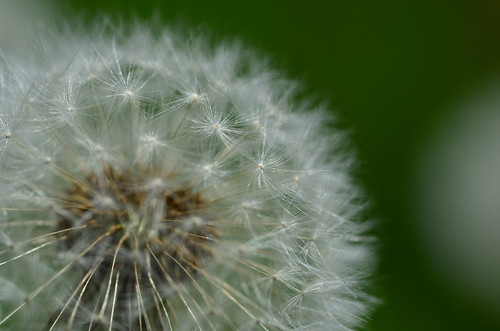
Common Dandelion Puffball
Taraxacum officinale, Asteraceae
Burnaby Mountain Conservation Area,
Burnaby, British Columbia, Canada
Nikon D5100, 105 mm f/2.8
May 11, 2014
While I couldn’t see my mother last Sunday I was able to spend some time with our other mother… nature. I spent the day enjoying the sunny weather up on Burnaby Mountain.
I think I was inspired to take this photo with all of the Cosmos talk about the dandelion seed like nature of the ship of the imagination. Though from a strictly botanical sense the puff or pappus at the end of a dandelion “seed” is actually made up of modified petals from the individual ray flowers that make up a dandelion “flower”. Even the dandelion “seed” is not actually a seed but a dry fruit known as an achene; the seed itself is located within. The more you know…
by ajblake
on May 11, 2014
{ }
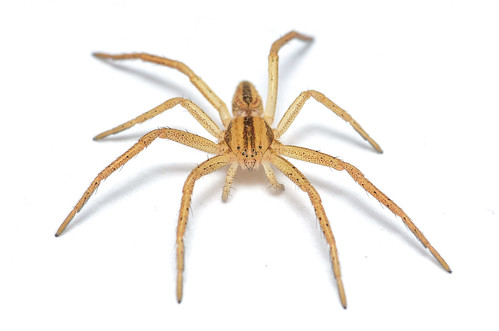
Slender Crab Spider – ♀
Tibellus sp., Philodromidae
Simon Fraser University, Burnaby, British Columbia, Canada
Nikon D5100, 105 mm f/2.8
May 8, 2014
This week’s photo is another arachnid from the annex. The slender crab spiders are smallish (4-15 mm) non-web building spiders who, unlike the sedentary true crab spiders (Thomisidae), actively pursue their prey. Mouse over the above image to see the underside of the spider, showing the epigyne, which is an important structure for the identification of female spiders. I took this shot using a sandwich bag to expose the underside. A great tip that I learned from BugGuide



Find Me On