by ajblake
on February 1, 2015
{ }
Space Needle Sunset
Space Needle, Seattle, Washington, United States
Nikon D5100, 70-300 mm f/4.5-5.6
January 30, 2015
Sara and I are in Seattle this weekend ignoring the Superbowl and celebrating our 3rd anniversary. I grabbed this shot from the car as we were headed south on the I-5 into Seattle. I really like how the low fog obscures the base of the Space Needle.
by ajblake
on January 30, 2015
{ }
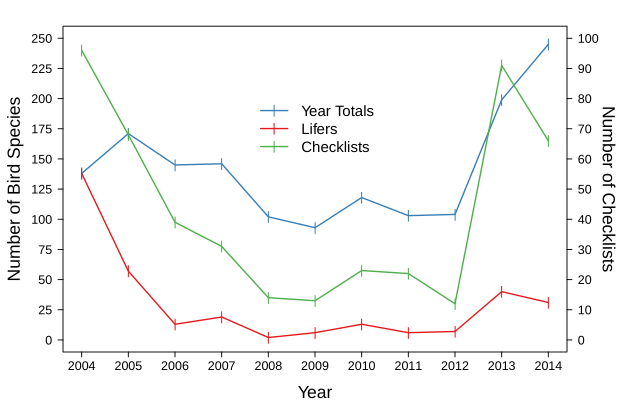
Figure 1 Annual North American totals for bird species, lifers (species not previously observed), and checklists (observations from a specific location and time).
2014 was another great birdwatching year for me with well over 200 species not including my November trip to Mexico making 2014 my best year yet (Fig. 1). Not surprisingly the majority of my birding happened in Metro Vancouver again this year but I did bird further afield than in 2013 (Fig. 2). Trips out to Alberta, Saskatchewan, Washington, the Okanagan, and Tofino helped bump up my year total relative to last year. Of my 245 North American (north of Mexico) species, 189 were from Metro Vancouver, 5 fewer species than in 2013. This drop in species was reflected in a drop in rank from 14 to 20 among Metro Vancouver eBird contributors [click to continue…]
by ajblake
on January 28, 2015
{ }
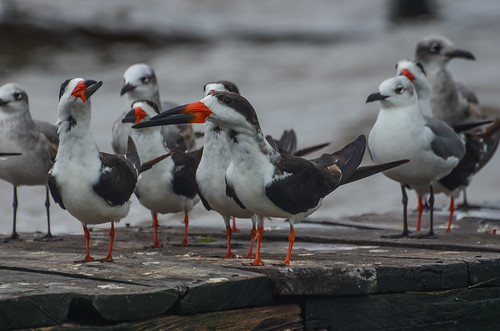
Black Skimmer
Rynchops niger, Rynchopidae
Río Lagartos, Yucatán, Mexico
Nikon D5100, 70-300 mm f/4.5-5.6
November 18, 2014
This week’s photo is of the unmistakable Black Skimmer. Skimmers have a unique bill with the lower mandible extending beyond the upper. This arrangement allows them to “skim” the waters surface for prey or or hot chocolate.
by ajblake
on January 21, 2015
{ }
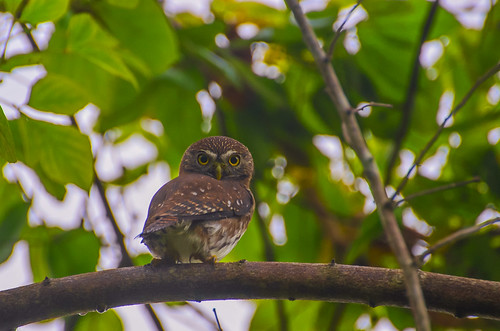
Ferruginous Pygmy-Owl
Glaucidium brasilianum ridgwayi, Strigidae
Trails Near Carretera 281, Yucatán, Mexico
Nikon D5100, 70-300 mm f/4.5-5.6
November 21, 2014
Here we have a Pygmy-Owl demonstrating the amazing ability of owls to rotate their heads up to 270°. Owl eyes are fixed in their sockets so they must rotate their entire head to change their field of view. Owls have several adaptations to their circulatory system that allow for the unrestricted flow of blood to the brain during this extreme head rotation.
by ajblake
on January 17, 2015
{ }
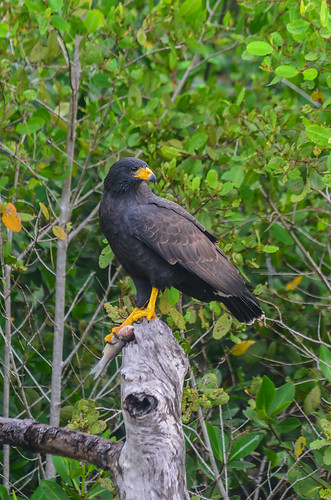
Common Black Hawk
Buteogallus anthracinus, Accipitridae
Ría Lagartos, Yucatán, Mexico
Nikon D5100, 70-300 mm f/4.5-5.6
November 18, 2014
This week a return to the Yucatán with this shot of a very cooperative Common Black Hawk. There are several neotropical black colored hawks but the extensive yellow lores help to separate the Common Black Hawk from co-occurring species.
by ajblake
on January 5, 2015
{ }
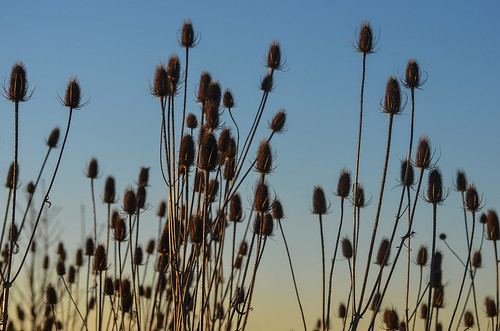
Bull Thistle Dried Flower Heads
Cirsium vulgare, Asteraceae
Blackie Spit, White Rock, British Columbia, Canada
Nikon D5100, 70-300 mm f/4.5-5.6
December 31, 2014
This week a break from Mexico photographs. I was out birding on New Years Eve trying to pad my year list. What first struck me was the height of these seed heads, which towered over my head (1.9 m), leaving me initially puzzled as to their identity. Great light from the low winter sun also helps to elevate this shot.
by ajblake
on January 4, 2015
{ }
Mating Common Eastern Bumble Bees
Bombus impatiens, Apidae
Boundary Bay Dyke Trail, Delta, British Columbia, Canada
Nikon D5100, 105 mm f/2.8
August 10, 2014
I’ve reviewed the 52 photos I selected as photos of the week and I’ve chosen my favorite. While I was less consistently photographing week to week, there were still lots of photos to pick from. I chose this shot of mating Common Eastern Bumble Bees as it was both a good macro photograph and it also captured a novel bit of insect behaviour. [click to continue…]
by ajblake
on December 31, 2014
{ }
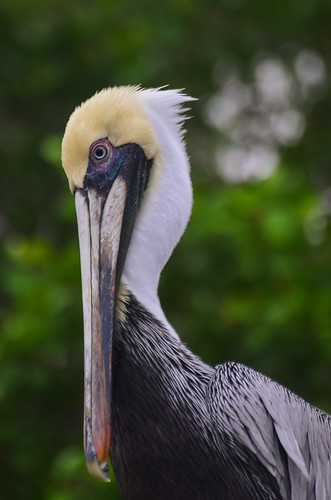
Brown Pelican
Pelecanus occidentalis, Pelecanidae
Ría Lagartos, Yucatán, Mexico
Nikon D5100, 70-300 mm f/4.5-5.6
November 18, 2014
I really like this portrait shot of this Pelican. It shows off how much of a misnomer brown is for these birds in their breeding plumage. It can take anywhere for 2-5 years for juvenile pelicans to mature into this bright adult plumage.
by ajblake
on December 31, 2014
{ }
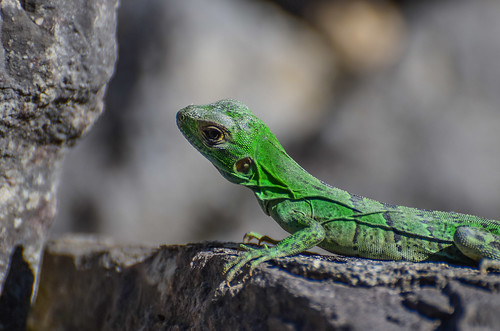
Juvenile Black Spiny-tailed Iguana
Ctenosaura similis, Iguanidae
Chichén Itzá, Yucatán, Mexico
Nikon D5100, 70-300 mm f/4.5-5.6
November 17, 2014
Looking at this little guy you probably wouldn’t guess that it was the same species as this large lazy lizard but you would be wrong. Juveniles in the genus Ctenosaura start out their lives green only later becoming spiny and black.
by ajblake
on December 31, 2014
{ }
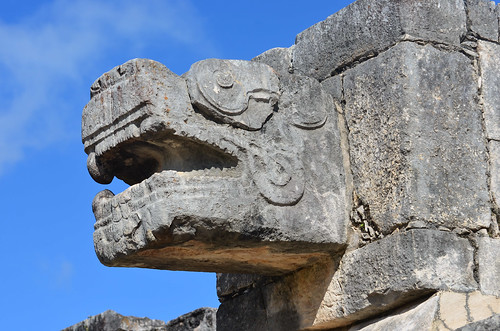
Kukulkan
Chichén Itzá, Yucatán, Mexico
Nikon D5100, 70-300 mm f/4.5-5.6
November 17, 2014
Here we see one of the snake heads adorning the side of the Plataforma de Venus, a offertory platform located to the north of El Castillo. Kukulkan was a feathered snake god worshipped by the Maya.



Find Me On